Field mission and Supports Research in the DRC Copperbelt - 2026

GeoRes4Dev kicked off 2026 with a dynamic field mission across the DRC Copperbelt, led by Prof. Bossissi Nkuba and Prof. Anouk Borst, to reinforce partnerships and advance community focused research on mining and water resources.
A major focus of the mission was supporting Israel Muchiza Bachinyaga’s PhD, which investigates how communities perceive the degradation of their water resources in mining areas. Israel’s work relies on interviews, focus groups, and a large scale survey to understand how households experience changes in water quality, access, and river use amid expanding mining activities.
Because this research examines both lived experience and governance dynamics, the mission placed strong emphasis on institutional dialogue. Strategic conversations with CRGM, SAEMAPE, UTL, UniKol, UJKOL, provincial authorities, and geological departments helped ensure that local institutions, regulators, and researchers are aligned with the realities communities report on the ground.
The team was accompanied by new GeoRes4Dev PhD scholar Samy Malango, supervised by Prof. Anouk Borst, whose research will focus on the geological aspects of newly discovered lithium-tin-tantalum deposits in the wider region surrounding the historic Manono-Kitotolo mines.
During the mission, time was set aside to discuss Samy’s PhD project, to make arrangements for fieldwork to the Manono region next summer, and to expose Samy to the more socio-economic, environmental, and community-led aspects of mining in Israel’s project.
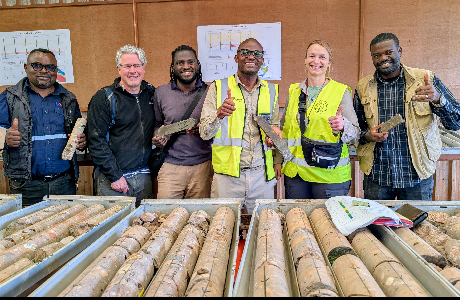
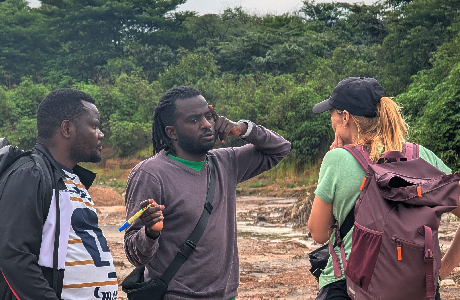
In light of Samy’s and other ongoing PhD projects, the team also met with industry stakeholders, including Kamoa Copper, KoBold Metals, MMR, Charlize Resources, and MinEx, to discuss site access, clarify data requirements, and expose the PhD students to real-world geological modelling and exploration workflows. A standout moment was an “intensive class” by Kamoa-Kakula’s geology team, strengthening students’ understanding of stratigraphy, resource estimation, and industrial geology.
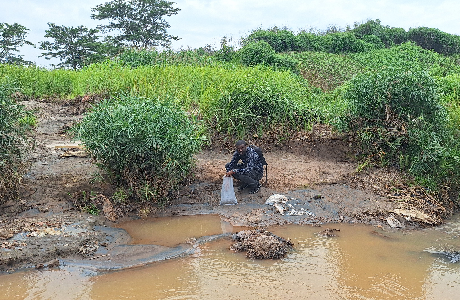
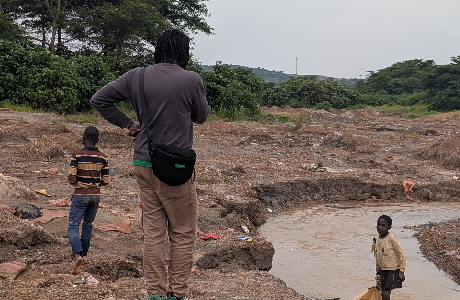
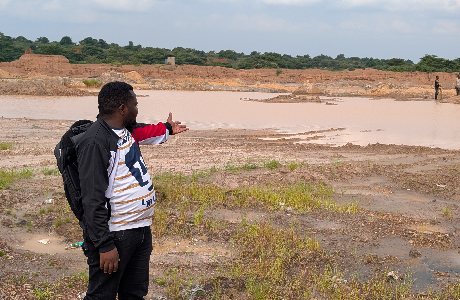
Field observations in Tshowelo provided key insights into how artisanal mining reshapes river systems, farmland, and local livelihoods—critical context for Israel’s ongoing community-level work. Sediment, tailings and ore concentrate samples were taken for parallel remote sensing studies on the environmental impacts of mining.
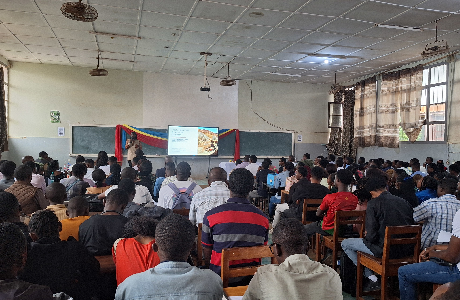
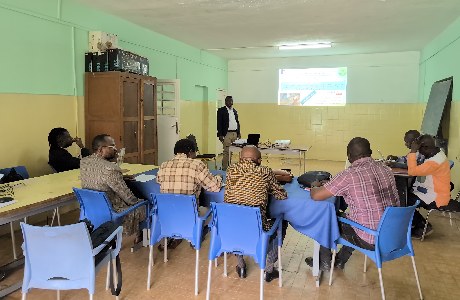
Through seminars at UTL and UNILU, plus a multi stakeholder roundtable in Kolwezi, GeoRes4Dev continued its commitment to knowledge sharing, capacity building, and creating dialogue between communities, academics, authorities, and industry.
Entering 2026, GeoRes4Dev is better positioned than ever to connect community voices, institutional perspectives, and scientific evidence, a foundation that will drive the next stages of research on water governance and mining impacts in the DRC.